
 Pluvia · Authorized Applicator
Let it pour.
Half the diameter. Twice the capacity.
Zero slope.
Ahmet Bilgin Yapı Malzemeleri is the fourth-generation steward of a commercial heritage spanning more than a century: since 1910 we have worked across every layer of the construction sector that demands trust, care, and discipline. As of 2026 we have carried that experience into siphonic roof drainage; as a Geberit Pluvia authorized applicator, we drain industrial roof projects completely through a small number of stacks, under engineer supervision. We offer assurance built on calculation, not estimation.
One collector group.
One stack.
Multiple Geberit Pluvia roof outlets connect through a zero-slope collector pipe to a single vertical stack — the basic unit of the siphonic system. On large roofs several groups are installed; each group has its own stack.
Roof outlet — Geberit Pluvia outlet
The Pluvia roof outlet draws water from the roof surface without admitting air; the function disc and anti-vortex baffle work together. Unless air ingress is prevented, the system cannot hold a vacuum and priming will not begin.
Collector pipe — zero slope
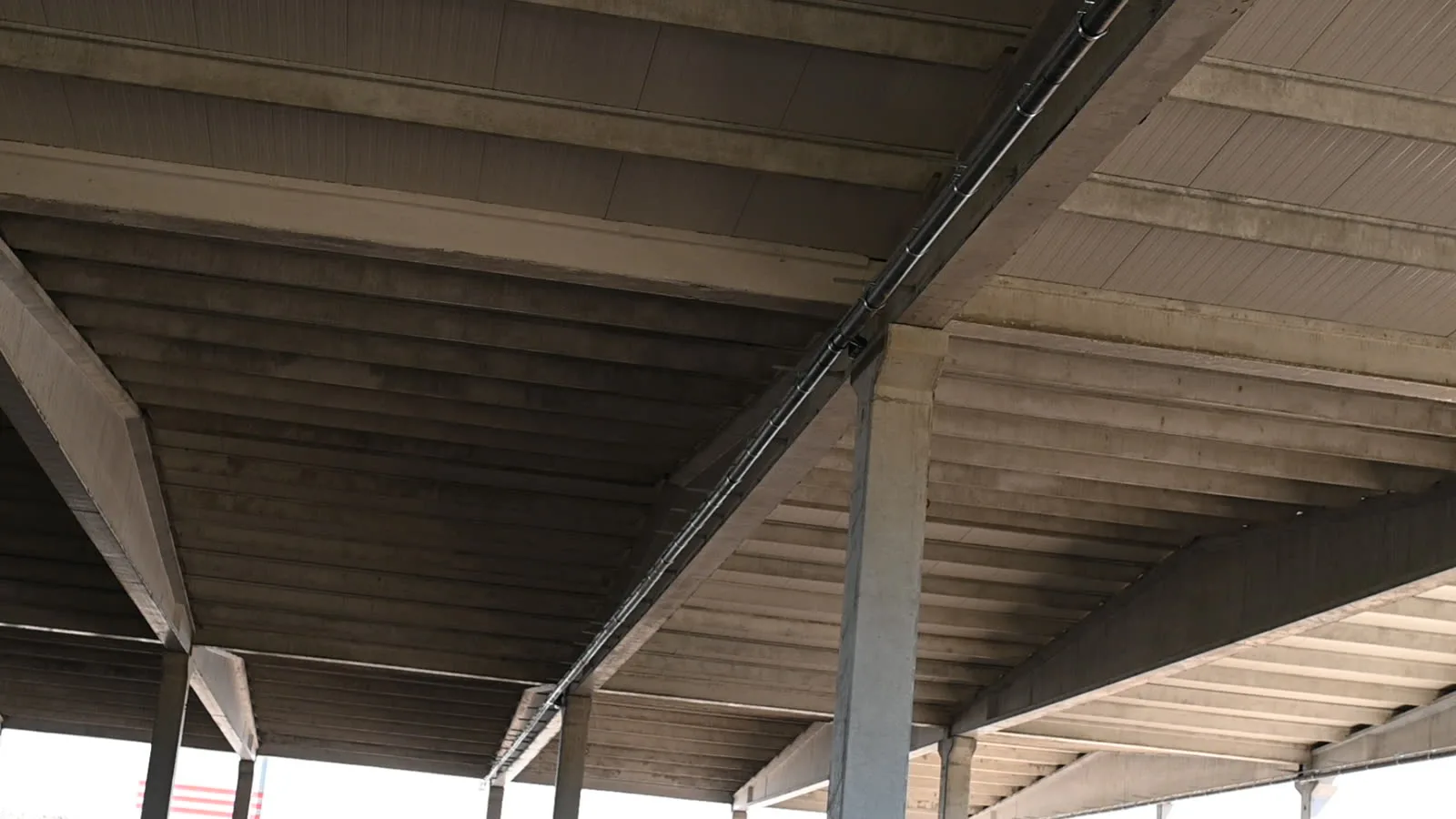
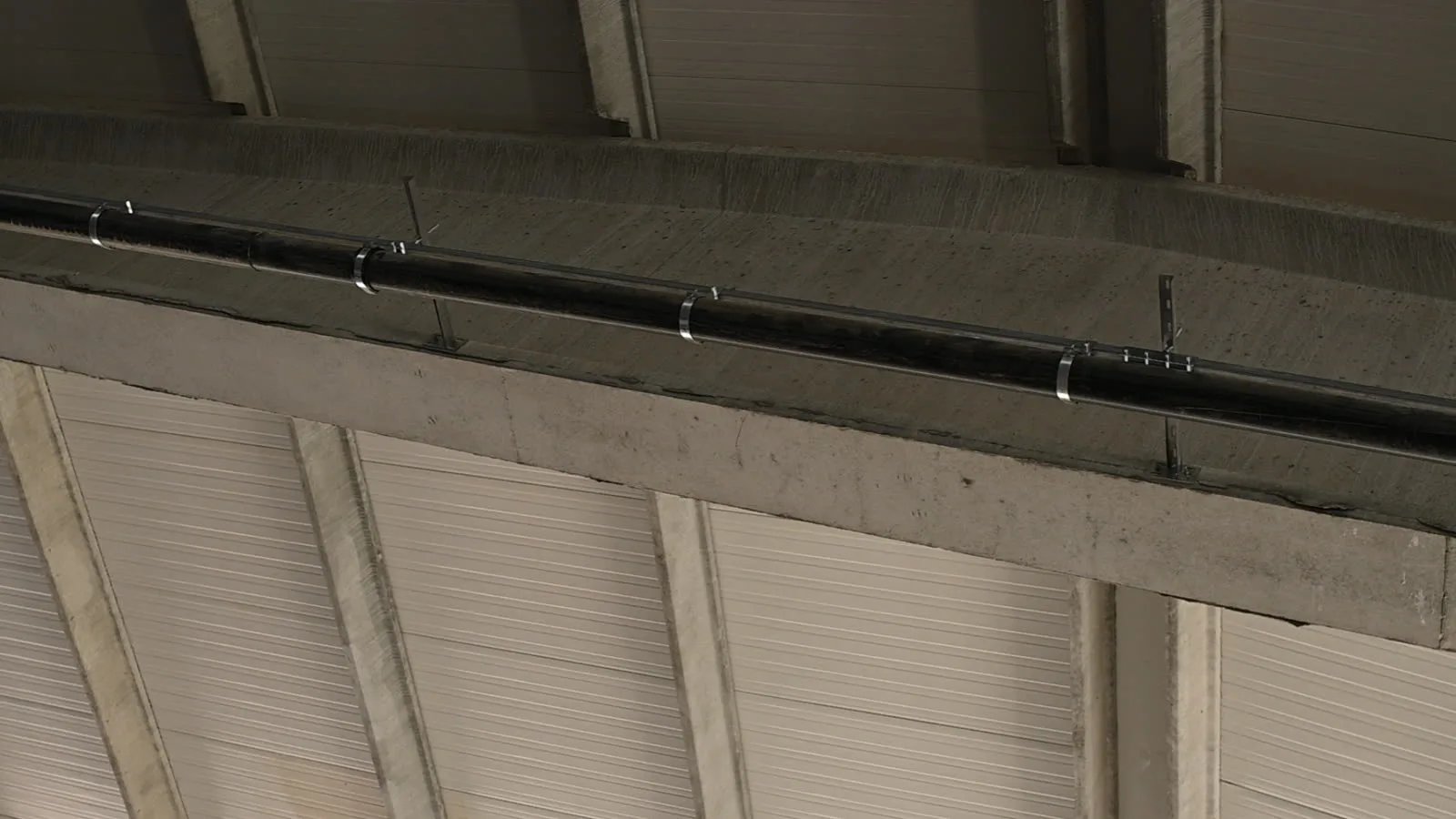
A horizontal HDPE line that carries the flow of multiple roof outlets and runs beneath the beams. Because the slope is zero, it does not interfere with the building's architecture; every joint is made by butt welding to DVS 2207.
Vertical stack — the vacuum driver
A vertical HDPE line positioned at every other column. The falling water column places the collector pipe under vacuum (typically −0.45 bar, peak ≤ −0.78 bar). The system primes and transitions to full-bore flow.
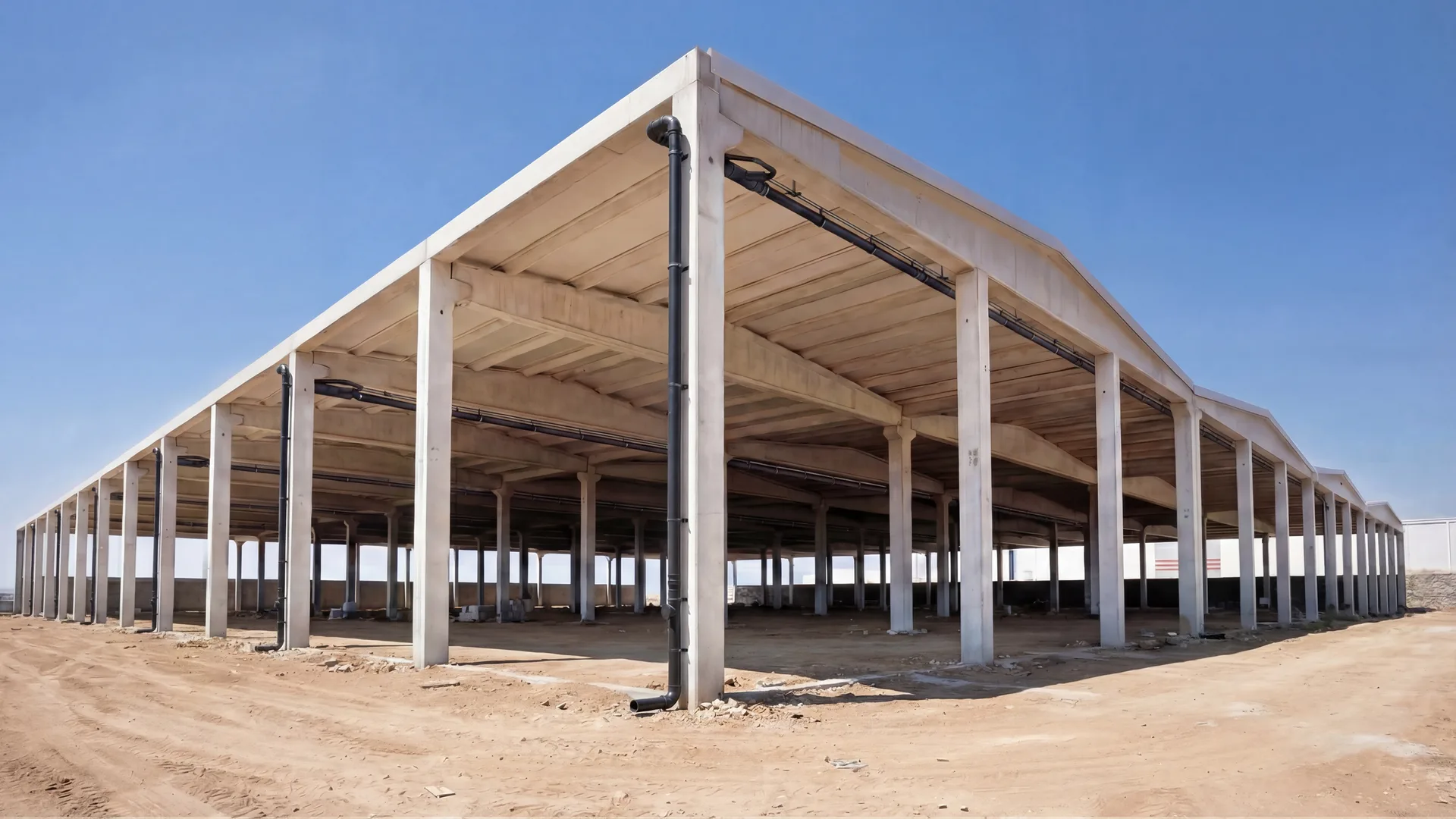
The diagram above is the technical counterpart of exactly this scene — a zero-slope horizontal HDPE collector pipe feeds the vertical stacks that connect to selected columns via elbows.
Not gravity —
pressure does the work.
Thanks to the air barrier (anti-vortex) placed at the roof outlet, siphonic drainage fills the pipe completely with water from the point of entry. The negative pressure generated inside the pipe draws water from the collector pipe toward the stack, evacuating it horizontally.
- Phase01
The air is swept out
As rainfall intensifies, the anti-vortex baffle of the Geberit Pluvia roof outlet keeps air from entering; the air within the line is swept from the collector pipe toward the stack.
- Phase02
Full-bore flow
The pipe cross-section fills 100% with water. No air pocket remains. This is the single condition that makes the siphon possible — TS EN 12056-3 §4.1.
- Phase03
Negative pressure builds
The water column falling through the stack creates negative pressure in the system. Pressure in the horizontal line drops below atmospheric; the system begins to draw water off the roof.
- Phase04
The line reaches equilibrium
A Bernoulli energy balance is established: the height difference fully offsets the friction losses (HL) along the line. Flow stays stable at 4–6 m/s, carrying several times the flow rate of a gravity system.
A line
signed off to standard.
Every system is delivered to international standards, with a BIM calculation and certified welding procedures. The specifications below are the technical index of a typical industrial installation package from Ahmet Bilgin Yapı Malzemeleri.
| Standard | TS EN 12056-3 |
|---|---|
| Pipe Material | Geberit HDPE (high-density polyethylene) |
| Pipe Diameters | ø 40 — ø 315 mm (DN 50/56/75/90/110/125/160/200/250/315) |
| Jointing | Butt welding, electrofusion (DVS 2207-1 / DVS 2207-15 certified) |
| Roof Outlet | Geberit Pluvia · function disc / anti-vortex · 14 / 25 / 45 / 60 / 100 L/s models |
| Hydraulic Calculation | Geberit ProPlanner — Revit BIM plug-in (Bernoulli + Darcy-Weisbach) |
| Operating Vacuum | Typical −0.30 / −0.45 bar · peak ≤ −0.78 bar (TS EN 12056-3 limit) |
| Flow Velocity | 4 — 6 m/s full-bore flow |
| Degree of Filling | ψ = 1.0 (after priming) |
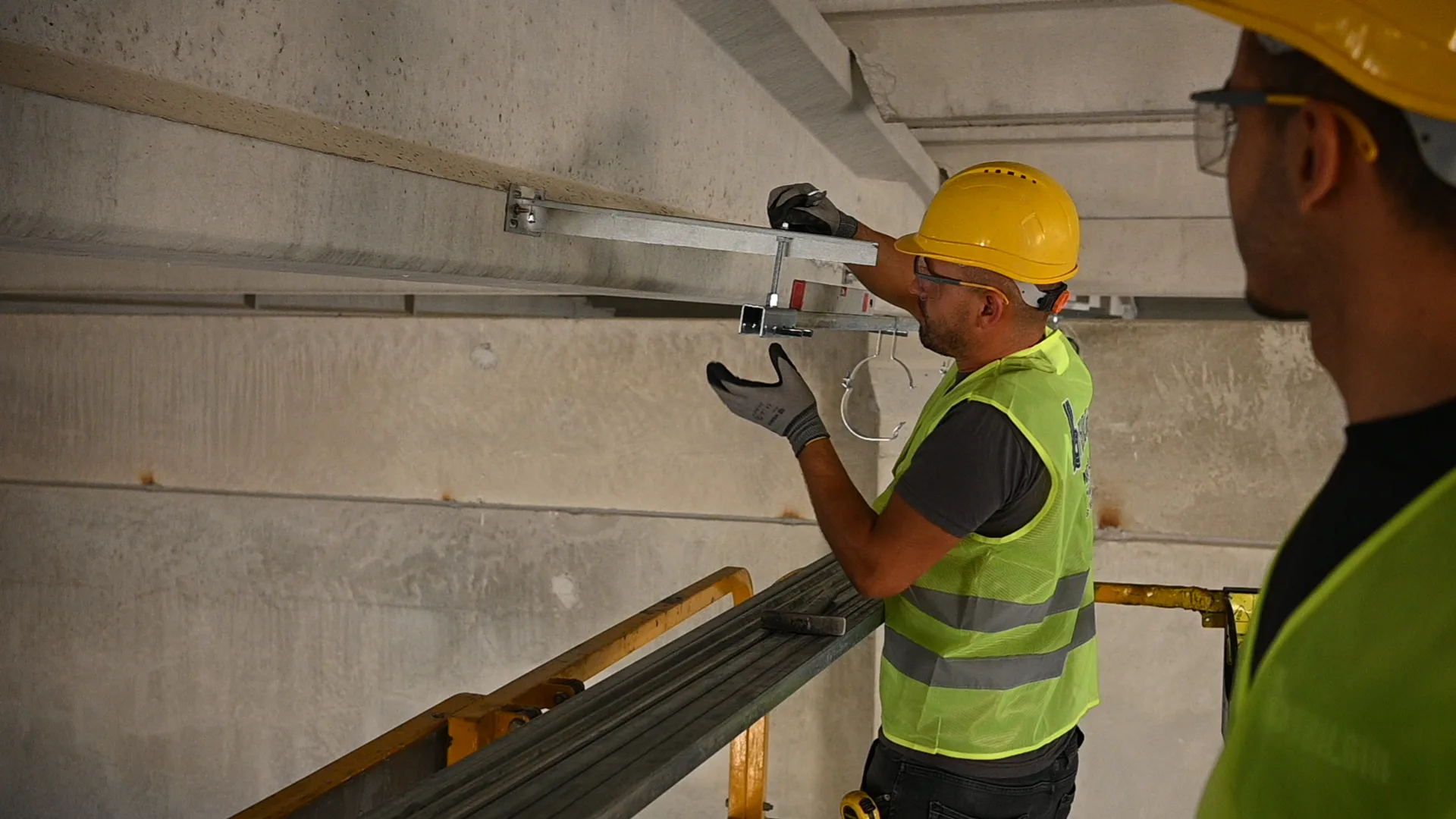
| Support System | Galvanized steel clamps, 0.8 m for ø50-90 · 1.1 m for ø110 · 1.2 m for ø125 |
| Operating Temperature | −40 °C → +60 °C |
| Service Life | ≥ 50 years (Geberit HDPE) |
| Fire Class | B-s1, d0 (with flame-retardant variant) |
| Warranty | 2-year Bilgin workmanship + Geberit HDPE manufacturer system warranty |
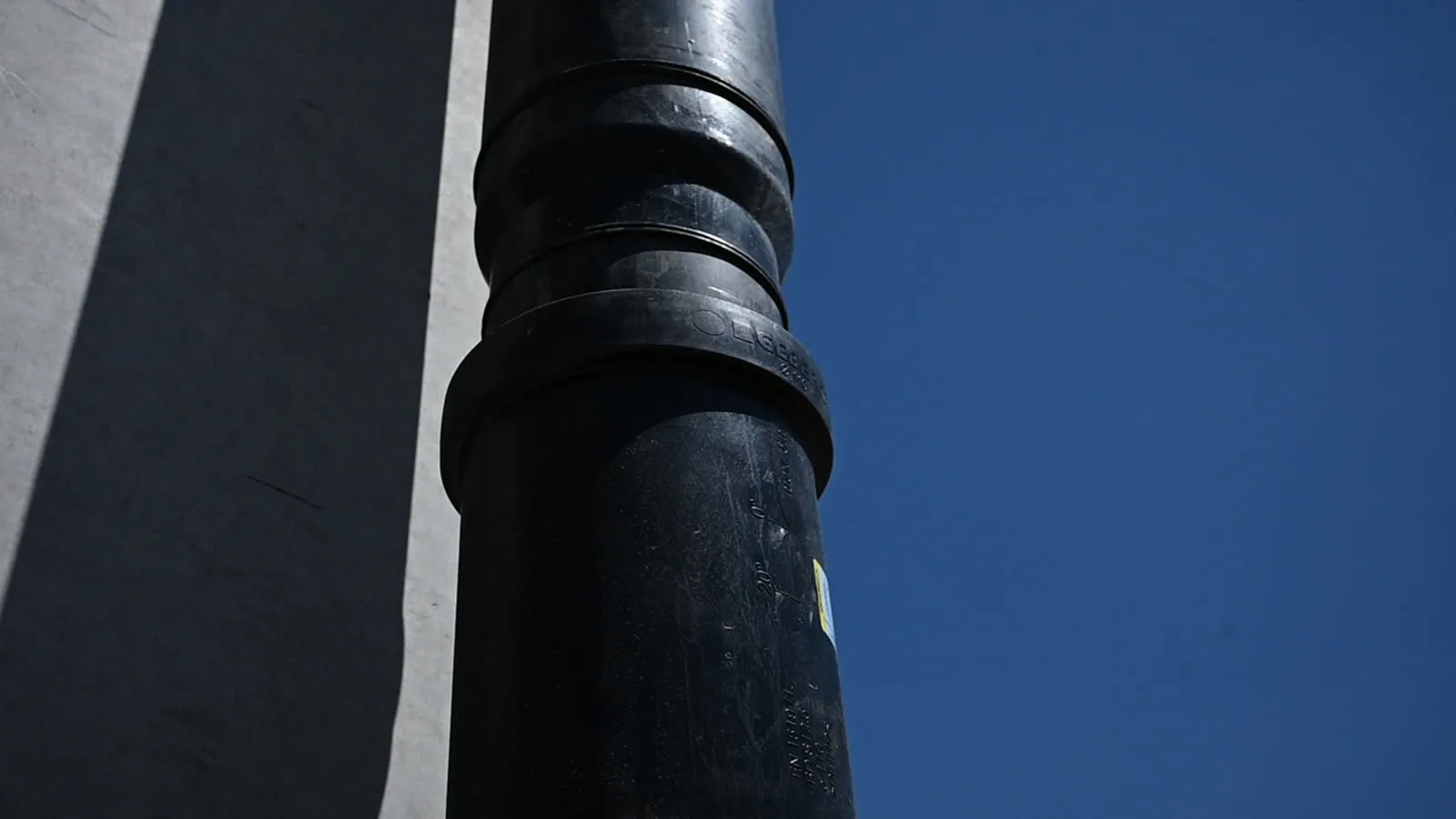
From bare plot to first
downpour.
The timeline of a single Bilgin project: from bare ground to building enclosure, through to how the system engages in the first rainfall. At every stage, engineer supervision and step-by-step documentation are applied.
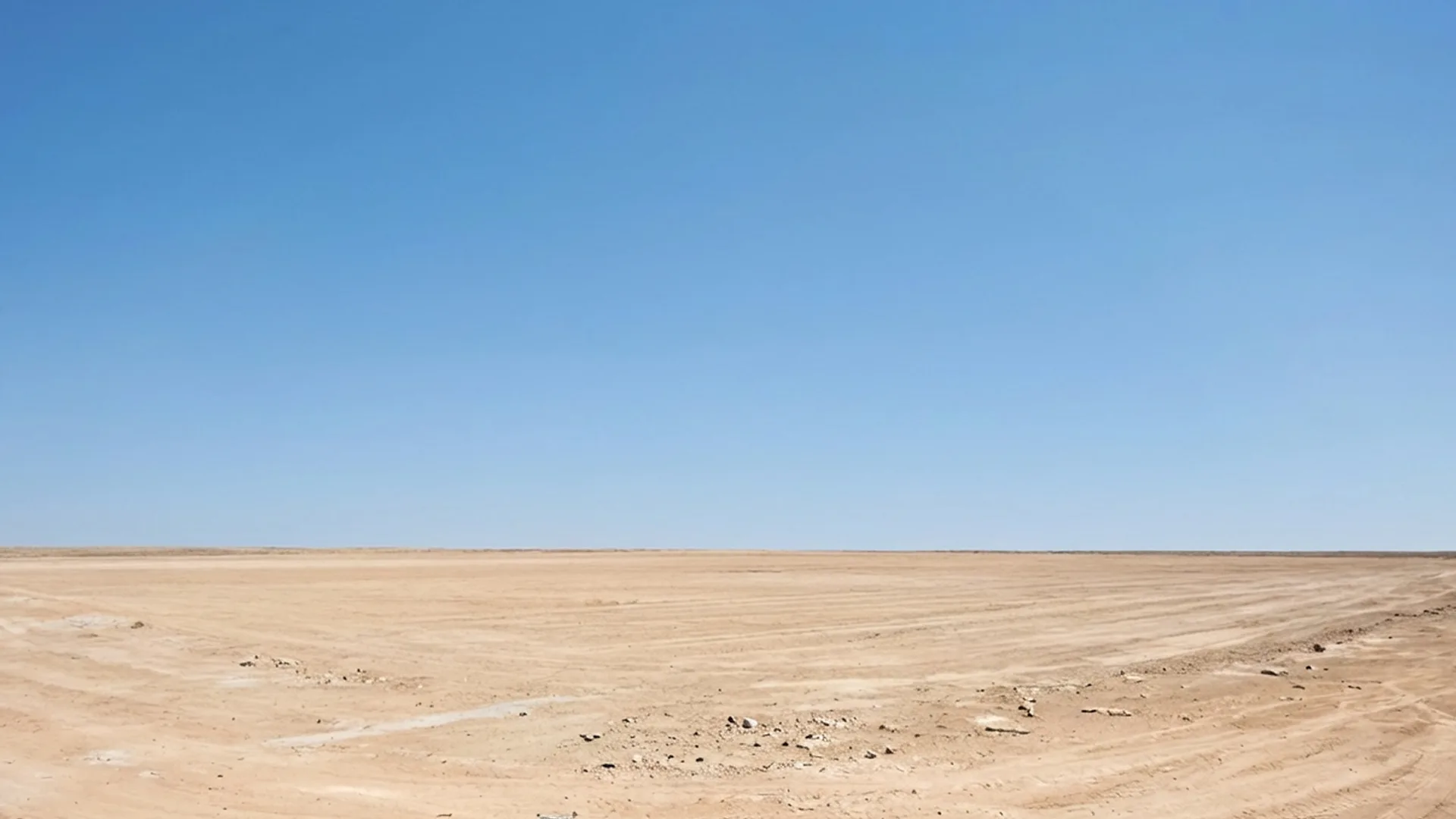 01
01Bare ground, blue sky. Not a single line yet — but the roof plan, rainfall data, and collector pipe route are already taking shape on the ProPlanner screen.
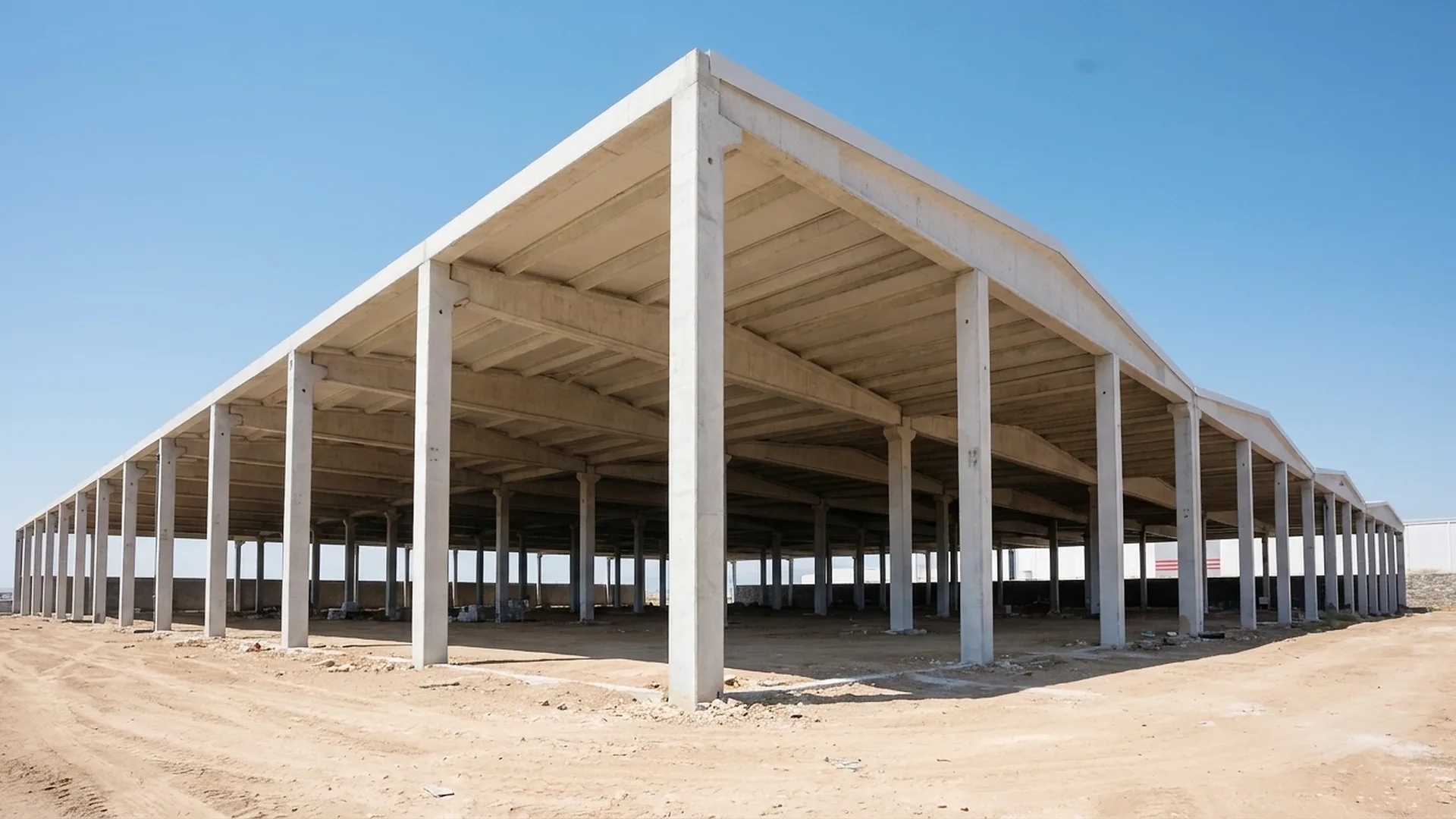 02
02Concrete columns and beams take their places. Bilgin is engaged at this stage: the stacks are positioned according to the column layout, and the bracket plan for the under-beam runs is finalized.
03The frame is complete and certified welders begin placing the siphonic lines. A vertical HDPE stack at every other column — the horizontal collector pipe above directs the water it gathers from multiple Pluvia roof outlets to this point.
 04
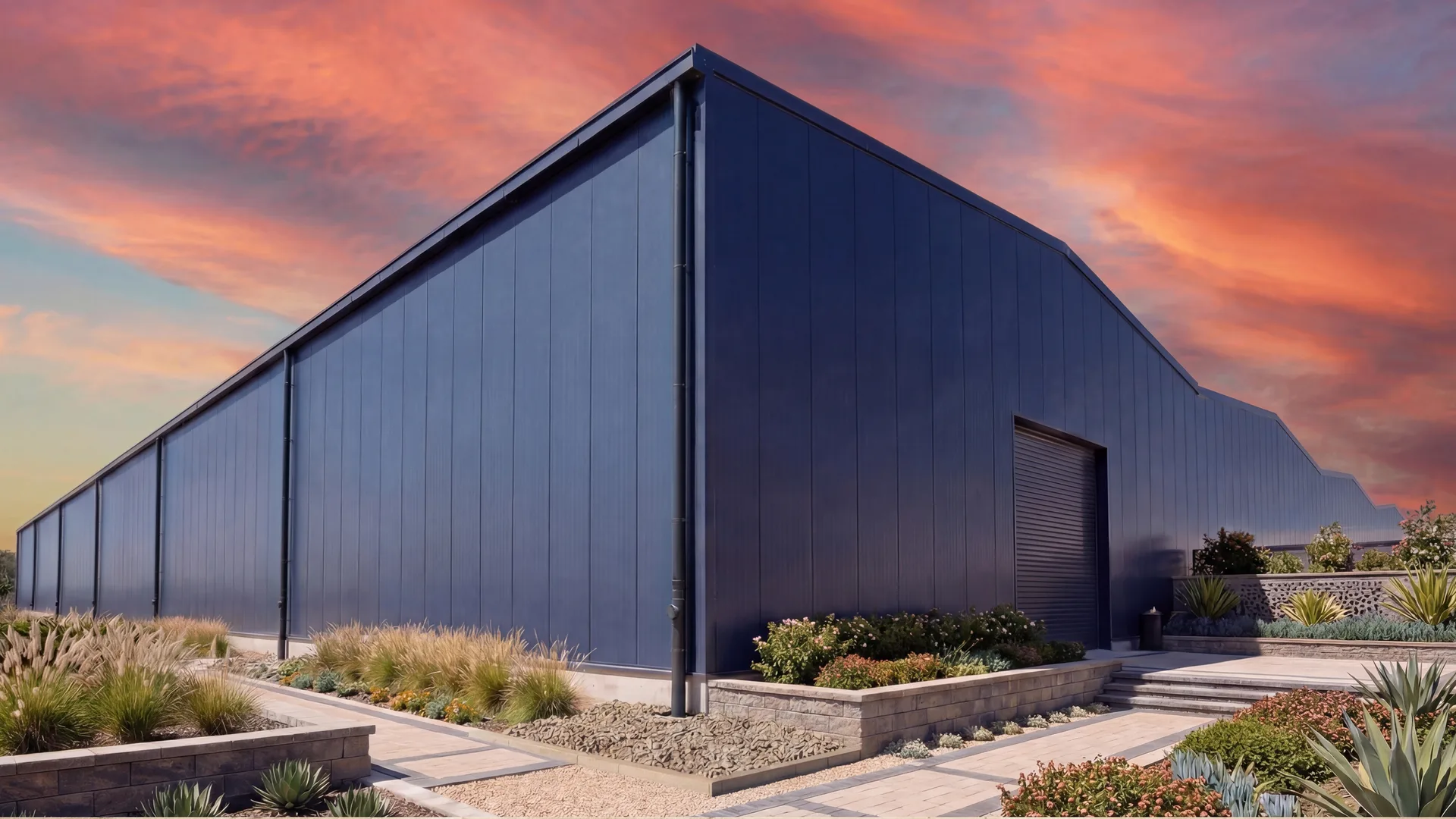
04The blue sandwich-panel façade is closed up. A system that is unseen but ready: Pluvia roof outlets on the roof, vertical stacks beside the columns, collection at ground level. The building enters its first evening.
 05
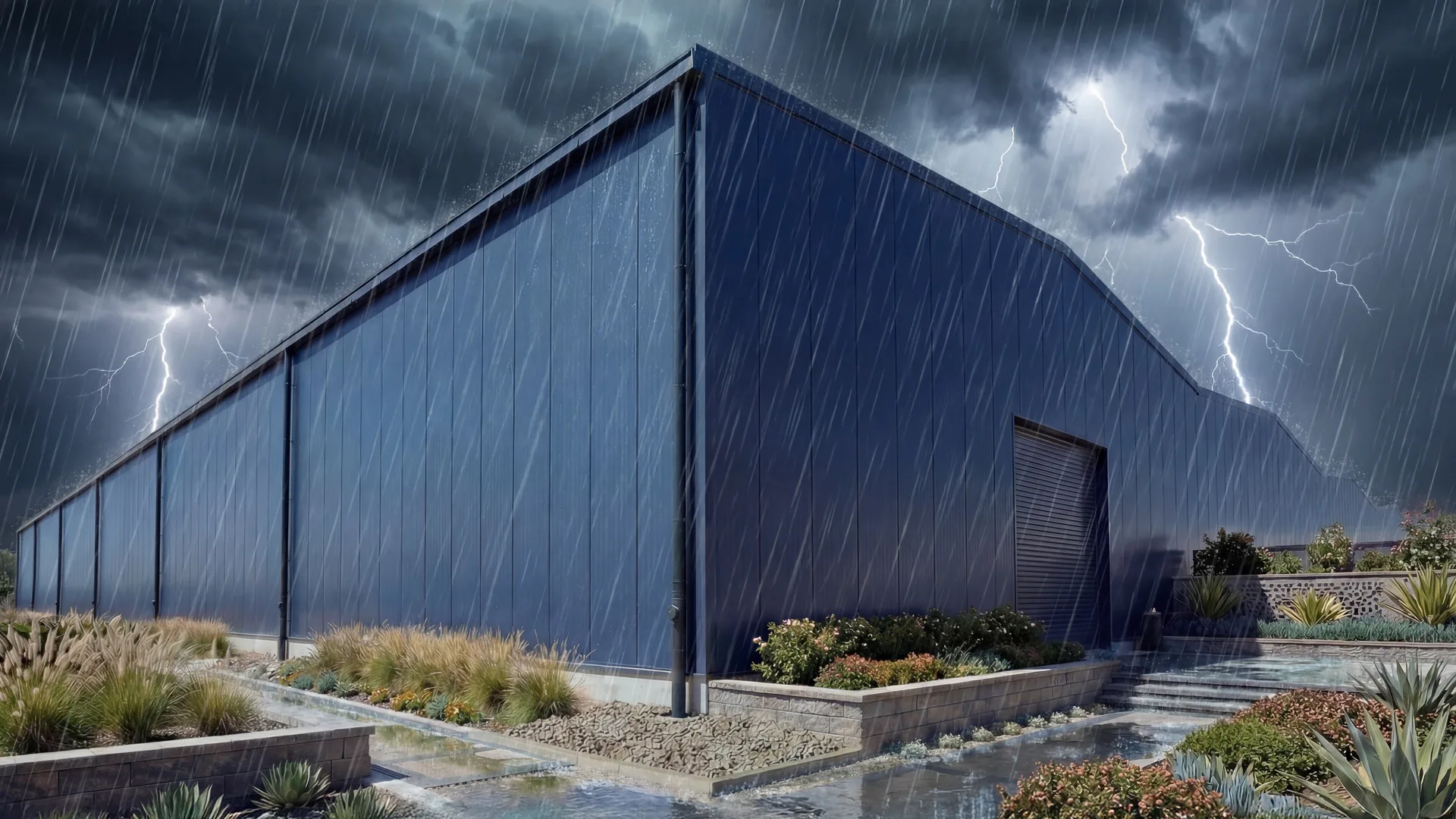
05Rainfall intensity crosses the threshold. The anti-vortex baffle disc prevents an air pocket; the water column falling through the stack creates negative pressure in the system. Within seconds full-bore flow begins — water never pools on the roof.
Not proven on paper.
Proven on the roof.
Siphonic roof drainage applications completed by Ahmet Bilgin Yapı Malzemeleri. From textiles to ceramics, from mining to food production; predominantly industrial roofs in organized industrial zones (OIZ). The list below shows completed projects — filter by province and sort by roof area.
How much flow
flow does your roof generate?
Enter your roof area and local rainfall intensity to see how many stacks a siphonic system would require, compared against a gravity system. This is a non-binding quick estimate; the definitive calculation is performed with Geberit ProPlanner.
Typical indicative values. The exact rainfall intensity is determined per project from local meteorological data.
The hydraulic calculation is delivered within 5 business days based on your roof plan and local rainfall report — a certified PDF and the Geberit ProPlanner output are included.
Start a ProjectA century of trust.
Four generations of the same responsibility.
Ahmet Bilgin Yapı Malzemeleri is a building materials and systems company that has served the construction sector since 1910, grown on the knowledge and responsibility accumulated across four generations. With a broad product discipline spanning ceramics and tiling, sanitaryware, fittings and plumbing solutions, it supports residential, commercial and industrial projects. As of 2026, a new field of expertise has been added to this long-established foundation: as an authorized applicator of Geberit Pluvia, we engineer and install siphonic roof drainage systems. Every step begins with engineering calculation.
The foundations were laid. Today the same work rests with the fourth generation.
The journey began with the production of sprung horse carriages. The handwork and fine detailing on them set the value that still defines the company: build it soundly, attend to the detail.
That production culture was carried into trade. Activity that widened with construction steel, timber and paint grew into a comprehensive service structure in building materials.
Siphonic rainwater drainage is run as a separate field of expertise: technical knowledge, engineering calculation and site experience under one roof.
The fine workmanship that once took shape on sprung horse carriages continues today, with the same care, in every drainage line built to engineering calculation.
Read the full story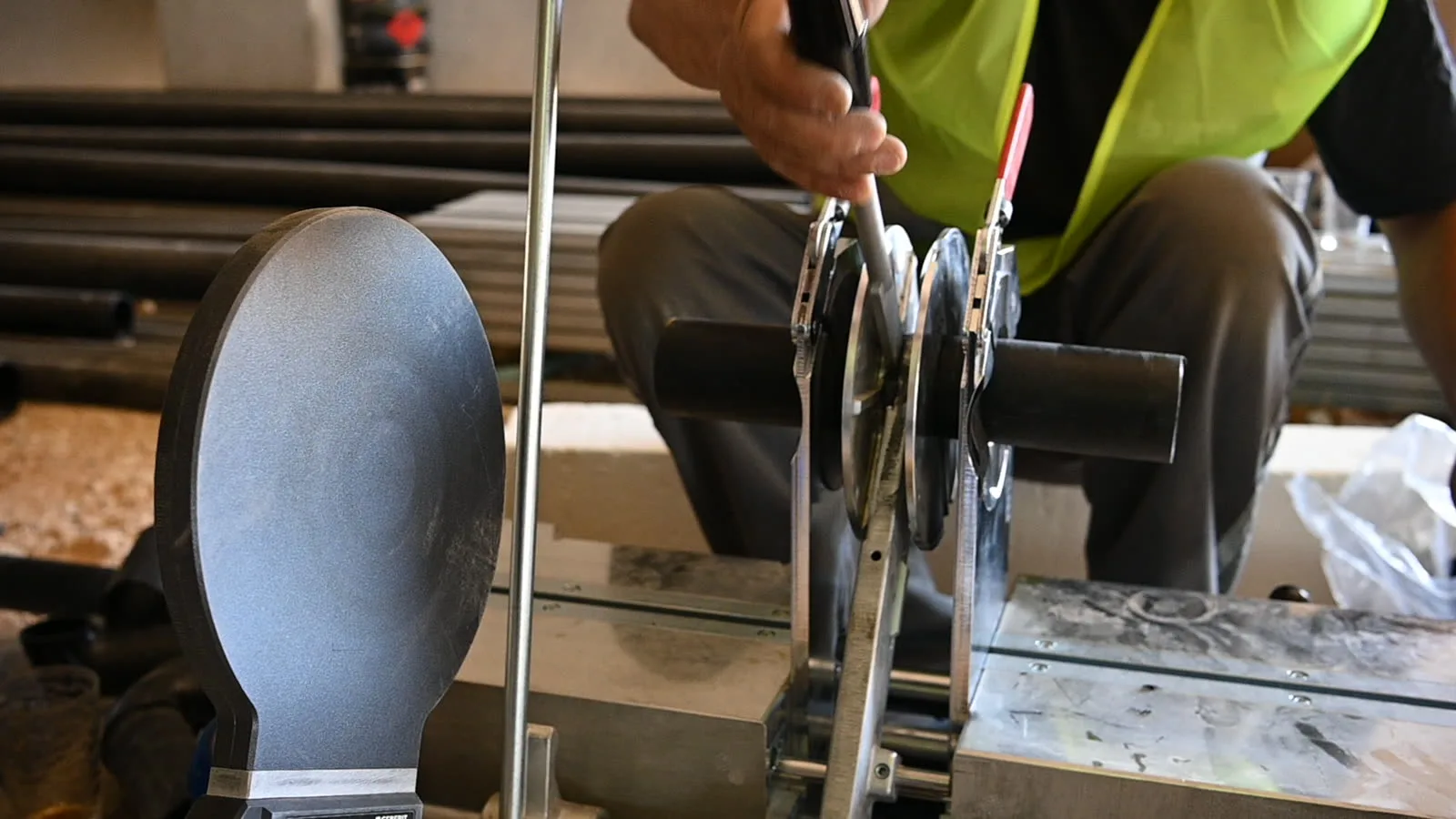
Yapı Malzemeleri
Four generations of accumulated construction culture find solid ground in siphonic drainage. Every line begins as a project file calculated at the engineer's desk; it is completed on site with our own team's DVS 2207-certified butt welding. Every meter on the roof has an exact counterpart in the project file.
We are an authorized applicator of the Geberit Pluvia system in Türkiye. All projects are calculated with Geberit ProPlanner and delivered with certification and technical approval.
The roof plan, slope, rainfall intensity (l/s/m²) and collector pipe route are entered into the system; the pressure loss of each segment is derived using the Bernoulli equation, and a certified PDF report is included in your delivery file.
Certified welders; butt and electrofusion welding on site under our own engineer's supervision — no subcontractors.
High-density polyethylene, with an estimated service life of ≥ 50 years; high resistance to corrosion and UV. Butt-welded joints are as strong as the pipe itself.
Bilgin workmanship warranty, in addition to the Geberit HDPE system warranty — the estimated material service life exceeds 50 years.
Every step
is calculated.
In a siphonic system, every meter of pipe must be the diameter defined by the calculation, and every joint must be made with certified welding. This discipline is the only condition that enables priming and holds the vacuum. At Ahmet Bilgin Yapı Malzemeleri the procedure is defined end to end — every step on site has its counterpart at the desk.
- 01Hydraulic calculation
The engineer at the desk first
The roof plan and local rainfall data are entered into Geberit ProPlanner; the pressure loss of each pipe segment is derived using the Bernoulli and Darcy–Weisbach equations. Output: a certified hydraulic calculation report.
Geberit ProPlanner · BIM (Revit) - 02Site survey
We go up on the roof and measure
Our engineer measures the roof in person on site. Column layout, bracket plan and collector pipe route are finalized according to the roof structure — the desk plan is reconciled with on-site reality.
Isometric · bracket/clamp planSite · under engineer supervision - 03Calculation-based supply
Project-specific materials
Pipe diameters and fittings are supplied in exact accordance with the list defined by the hydraulic calculation. Nothing is pulled off the shelf; every line is prepared to order.
Geberit HDPE · ø 40 — ø 315 mmOriginal Geberit fitting — labeled - 04Certified welding
Every joint logged to DVS 2207
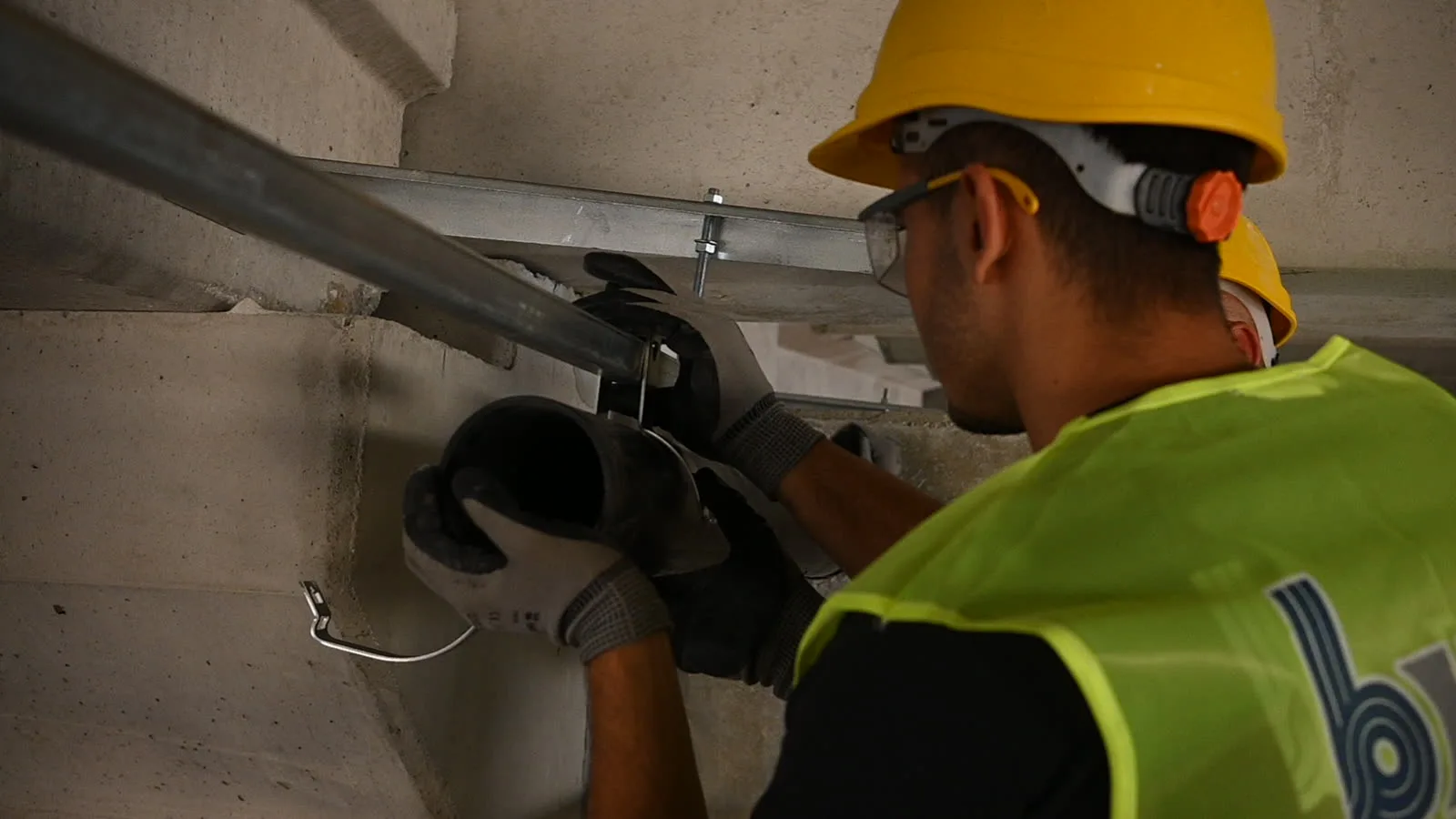
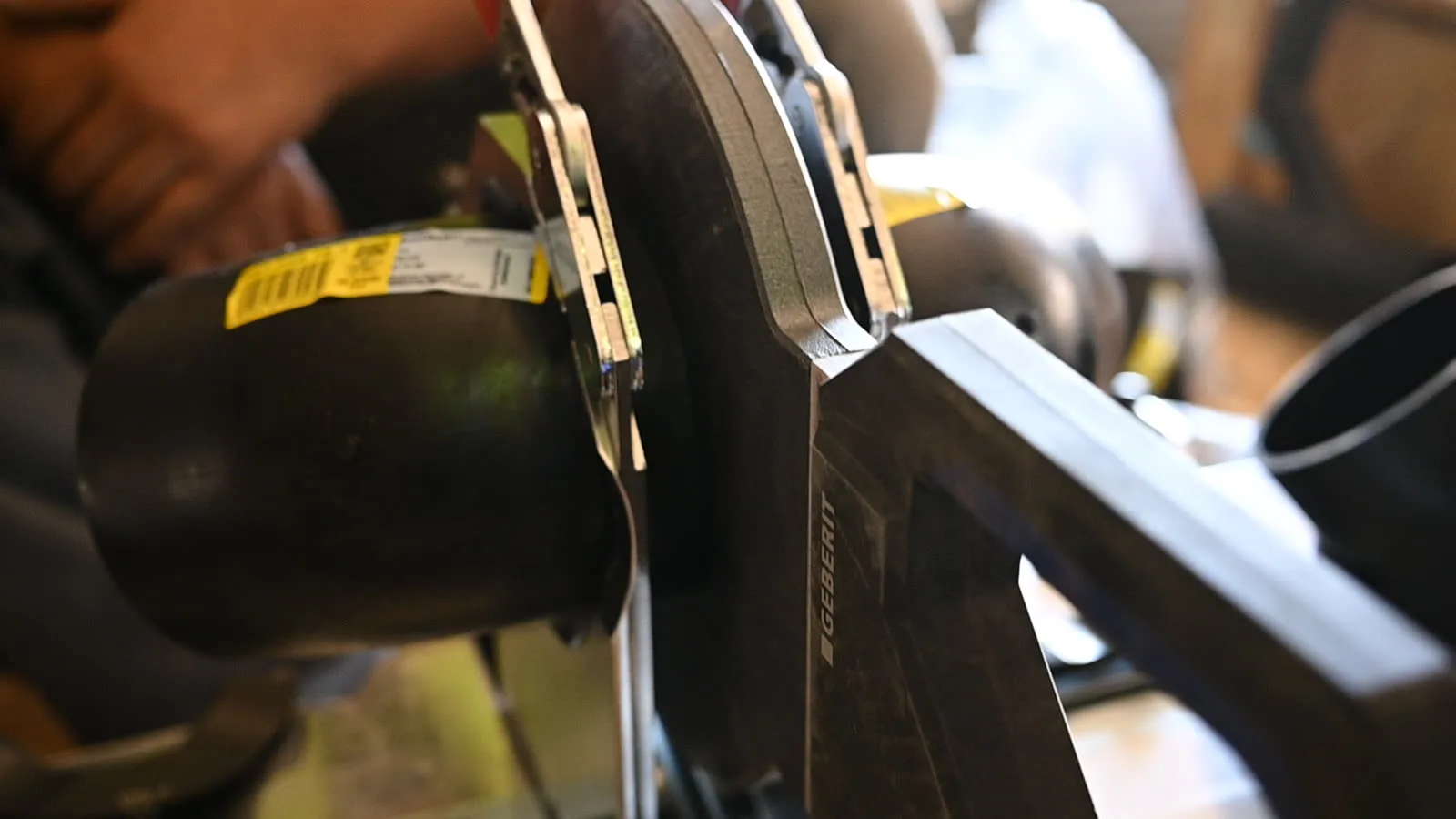
Butt welding and electrofusion are performed by our DVS 2207-certified welders. Every joint is logged for temperature, pressure and time; the engineer supervises on site.
DVS 2207-1 (butt) · 2207-15 (electrofusion)Butt welding · clamp + heating plate - 05Testing & commissioning
Proof before going live
The line is delivered with a pressure test, visual inspection and a commissioning run. The test report, welding log, hydraulic calculation and warranty certificate are handed over together.
Pressure test · warranty fileHandover · completed collector pipe
Hydraulic calculation report · Isometric (DWG + PDF) · Welding log · Test report · Bilgin workmanship warranty certificate.
Frequently
asked questions.
Frequently asked questions about the design, hydraulic, material and certification process. For anything you can't find an answer to, write to us.
01Are siphonic and vacuum rainwater drainage the same thing?
02Water ponds on my roof. Will a siphonic system solve it?
03How does a siphonic outlet differ from a standard roof drain?
04Does a siphonic system replace the rainwater gutter?
05What is the difference between siphonic and conventional (gravity) drainage?
06I have a gravity system on my existing roof; is switching to siphonic difficult?
07Is HDPE pipe rust-proof, and how long does it last?
08Who performs the calculation, and how is it certified?
09What is the warranty period?
010Is it used on factory, warehouse or shopping mall roofs?
011Is it compliant with fire regulations?
Let's calculate
your roof.
Send your roof plans and regional rainfall data to the Ahmet Bilgin Yapı Malzemeleri engineering team; within 5 business days we will prepare and present a preliminary hydraulic report and a system proposal. Headquartered in Uşak, with project management across Türkiye.